Walk into any bass forum, any gear group, any comment section and ask one simple question: what should I buy for $500 or less? Within ten answers, one word appears more often than Fender, more often than Ibanez: Sire. A company most players had never heard of ten years ago is now the default answer of the entire budget bass internet, and the used listings tell the same story: Sires sell in days while famous badges sit for months.
So let's answer the question properly, with receipts: what actually happened, what you get for the money, and — because there is always a catch — the three documented weaknesses the fan threads rarely mention.
▶ Prefer to watch? The full 19-minute video version is on our channel. Bass Gems on YouTube · honest, no-hype bass gearThe deal that built the brand
To understand Sire, you need the budget bass market before 2015. Three hundred dollars bought you an entry-level instrument from a famous brand, and everyone understood the deal: decent wood, cheap electronics, and a silent agreement that the good stuff started three price tiers higher.
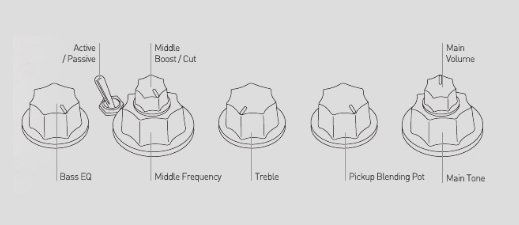
Then a South Korean company backed by large-scale Asian manufacturing did something unusual. Instead of hiring a marketing agency, they went to Marcus Miller, one of the most recorded bass players in history: the slap sound behind decades of records. By every account of the story, Miller's demands sounded insane for the price bracket: a real, powerful 18-volt active preamp with a genuine three-band EQ. Rolled fretboard edges and proper fretwork, playability details that normally live on four-figure instruments. And all of it at prices a student could reach.
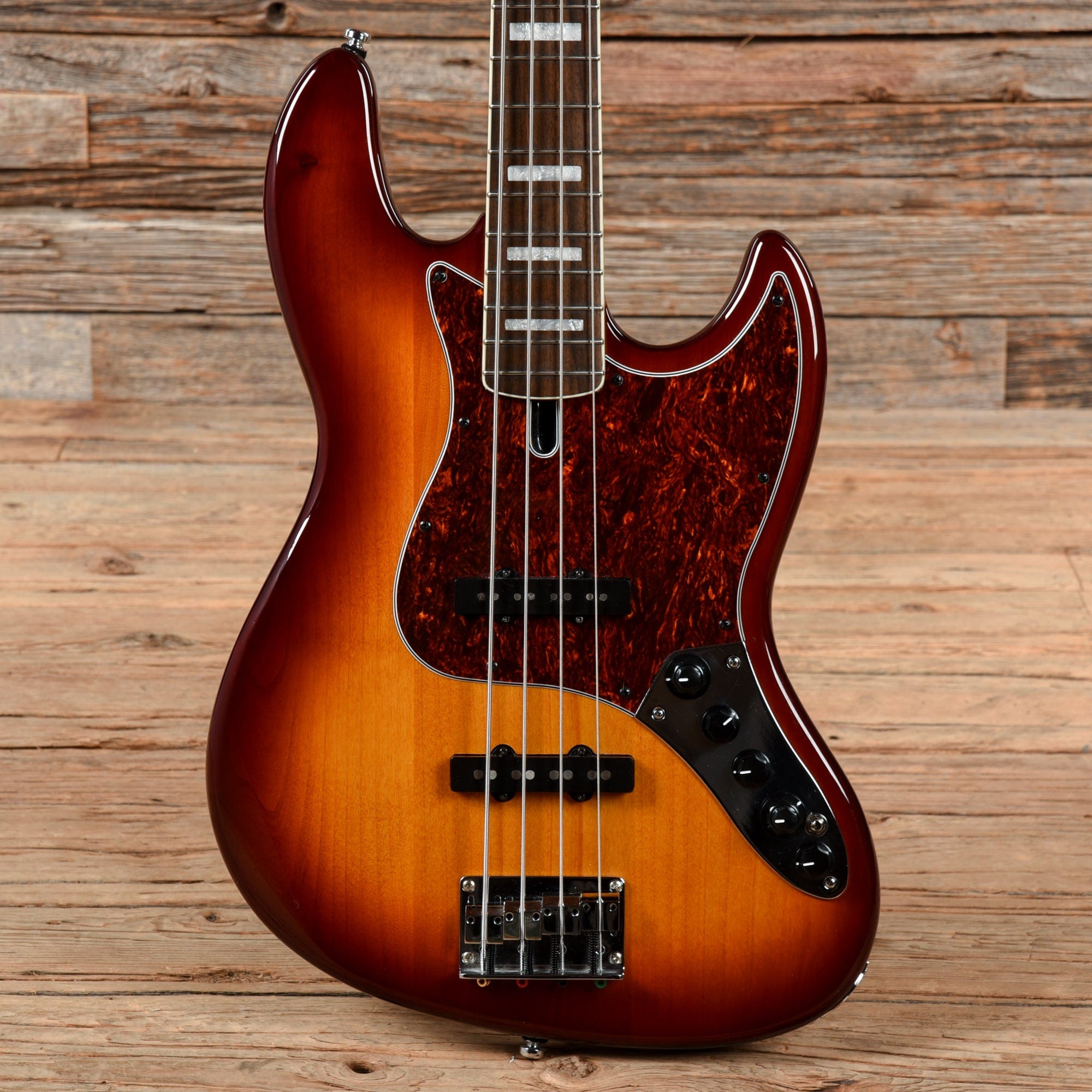
The result was the Marcus Miller V7, and the market reaction was slow, then sudden. Players bought them expecting the usual budget compromise, plugged them in, and found a preamp that could reshape the entire voice of the instrument on a bass that cost less than a weekend trip. The reviews wrote themselves. The forums did the advertising for free.
The system: V · P · M · Z · U
Sire's naming looks like alphabet soup until someone explains it. Two minutes, and you'll never pick the wrong bass:
| Letter | What it is |
|---|---|
| V | The classic jazz-bass recipe: slim neck, two single coils, the sound in every funk, soul and pop record you love. |
| P | The precision-style recipe: thicker, rounder, foundational thump. |
| M | Modern soapbar sound: more hi-fi, more aggressive. |
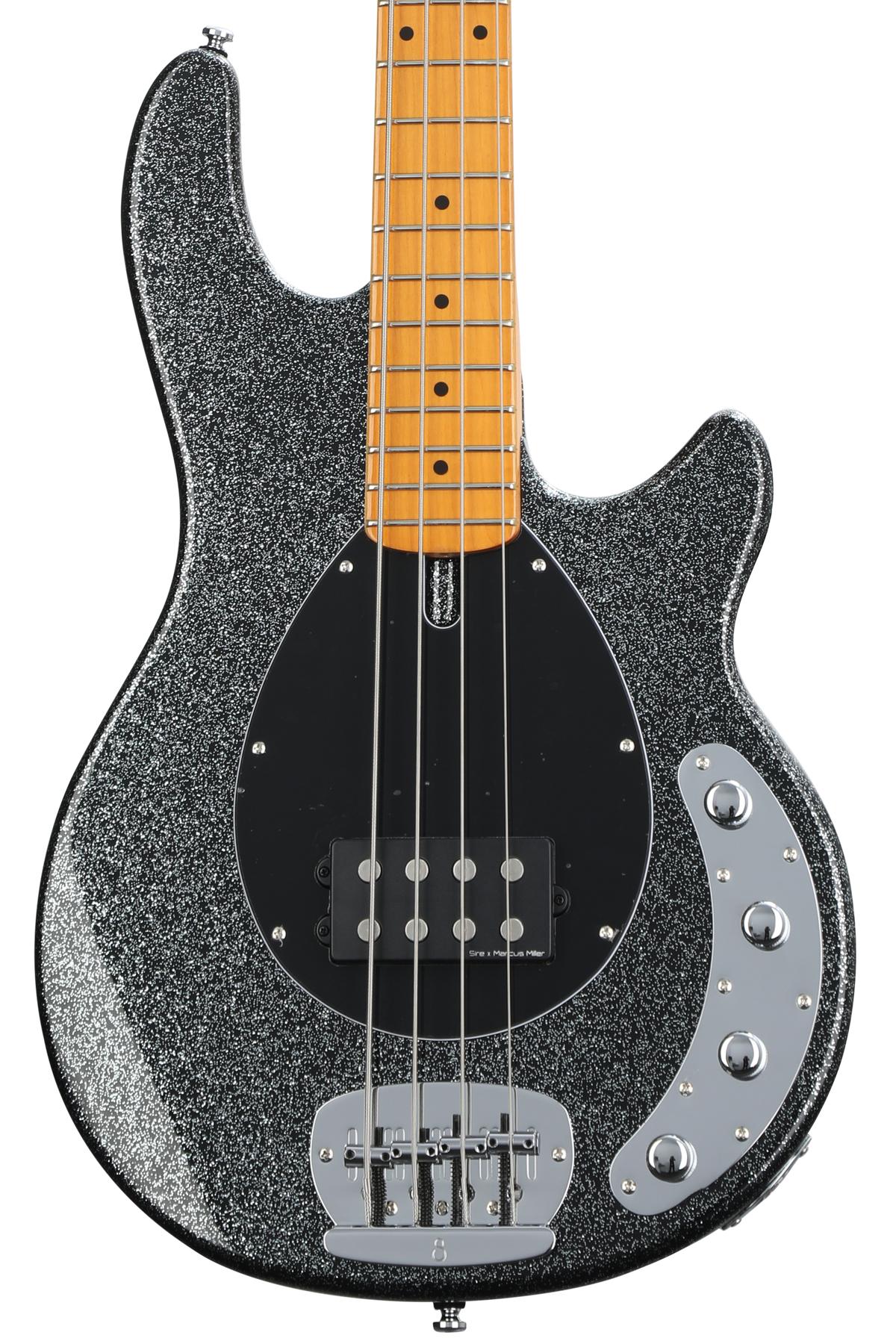
| Z | The newest family: Sire's take on the StingRay-style humbucker growl. |
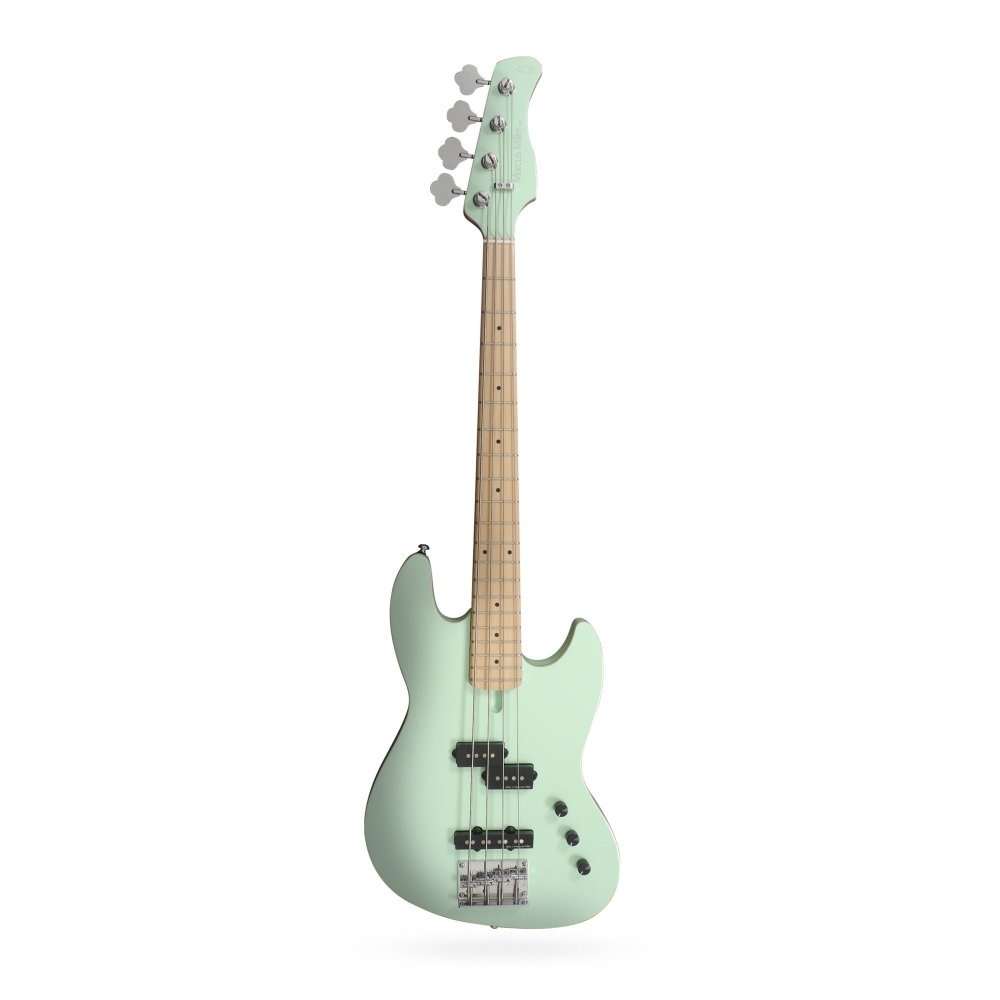
| U | Short scale: smaller, punchier, easier on hands and shoulders. |
The number is the trim level, and this is where Sire got genuinely clever. The V3 (~$300) is the entry door: real active preamp, slim fast neck, at a price where competitors offer a volume knob and good wishes. It's Thomann's all-time favorite of the whole line, with over 2,000 sold at that one retailer alone. The V5 drops the active circuit for a pure passive vintage recipe, and there's a serious argument it's the best pure value in the catalog. The V7 is the famous flagship. Above that, V8s and V10s climb toward premium territory while undercutting the big names by embarrassing margins.
What owners actually say
Skip the launch-day reviews: long-term owner reports are where the truth lives. We read hundreds across TalkBass, Reddit's r/Bass and retailer reviews. The pattern is remarkably consistent:
A long-time TalkBass owner called the Sire unit "one of the best sounding preamps I've had in an active bass."
TALKBASS · V7 OWNER THREAD
Reviewers consistently rate the fretwork above its class: one comparison put the V7's fret finishing on the level of a California-built Fender Jazz, and ahead of most non-US instruments. The rolled fretboard edges are the single most-quoted reason a Sire "feels more expensive than it is."
PREMIER GUITAR · THATGUITARLOVER · RETAIL REVIEWS
Multiple retail reviewers report their bass arrived very playable straight out of the box, needing only a quick tune or a minor setup tweak.
ZZOUNDS USER REVIEWS · GEAR PAGE
The recurring complaint: weight. Owner-reported weights for the same model range roughly from 8 to 10 lbs; several reviewers recommend the V7 "only if you don't mind the weight."
TALKBASS · RETAIL REVIEWS (PARAPHRASED)
And the QC lottery is real: most instruments arrive excellent, but forum threads document outliers with sharp fret ends in dry seasons, high frets, or setups needing real work before the bass shows its potential.
TALKBASS · R/BASS OWNERSHIP THREADS
How is it this cheap?
A bass with premium features at a third of the premium price is not magic. It's a set of decisions, and you deserve to know them:
- Manufacturing location. Sire builds in large modern factories in Indonesia and China, the same industrial ecosystem that builds mid-range instruments for nearly every famous brand you can name. Modern CNC machining, experienced workforces, labor costs that make the math work.
- Near-zero ad spend. No stadium sponsorships, no full-page campaigns. The Marcus Miller name and ten years of forum evangelism are the marketing department. When you buy a legacy brand's budget instrument, part of your money funds the brand machine. Here, that line item mostly isn't there.
- Value engineering. Money goes where hands touch and ears hear (necks, frets, preamps) and gets saved where they don't: simpler finishes on lower models, solid-but-not-boutique hardware, packaging, dealer margins.
That is, honestly, why our channel and this brand keep crossing paths: they run the same playbook we preach every week, at industrial scale.
The three catches
If you only read the fan threads, Sire has no flaws. And whenever the internet agrees something has no flaws, we get suspicious. There are three real ones:
The QC lottery
Enormous volumes at aggressive prices mean honest tolerances with real outliers. Most Sires arrive excellent; some need work. The hype makes people expect perfection. Statistics don't care.
✓ The fix: budget $40–60 for a proper setup, or learn to do it yourself. The outlier problem mostly disappears.
The weight lottery
Bodies (especially ash on certain V models) vary noticeably. Order online and you might get the 9-pound or the 11-pound version of the same bass. Your shoulder finds out on hour three of rehearsal.
✓ The fix: buy from sellers who list actual weights, or accept the lottery knowingly.
Soft resale value
The one the fan forums rarely say out loud: Sire's relentless retail value is exactly what caps the used price. Nobody pays strong money for a used Sire when a new one is affordable and always in stock.
✓ The fix: a Sire is a bass you buy to play, not to park money in. Buy new, keep it for years, then it's irrelevant.
Sire vs. the actual competition
A recommendation without alternatives is just an advertisement. Bracket by bracket:
| ~$300 | The honest split |
|---|---|
| Sire V3 | By far the most powerful electronics and the most expensive feel in the class. |
| Ibanez GSR200 | Thinnest, fastest neck and the lightest body: the fast-rock comfort pick. |
| Yamaha TRBX304 | The most reliably consistent build of the three. A tank that never surprises you. |
| ~$450 | The honest split |
|---|---|
| Sire V7 | Objectively more instrument: electronics, finishing detail, tonal range. |
| Fender Player | The name, the resale value, a dealer network on every corner. You're buying an instrument plus a badge plus an exit strategy. Both purchases are legitimate — only one is honest about what the extra money buys. |
| StingRay sound | The honest split |
|---|---|
| Sire Z3 | The bigger electronics package and fancier construction details at the same money. Possibly the first bracket where Sire is the favorite, not the underdog. |
| Sterling SUB Ray4 | The licensed original recipe, still a great buy. |
Who should buy one — and who shouldn't
Buy a Sire if…
- You're a beginner with ~$300 who wants one bass that can grow with you for a decade → V3
- You love classic passive simplicity and want maximum instrument per dollar → V5
- You want the full famous experience from the demos → V7
- You want StingRay growl without the invoice → Z3
- Smaller scale suits your hands or style → U5 short scale
Walk past the hype if…
- You need a guaranteed dead-on setup out of the box and won't touch a truss rod: the QC lottery will eventually find you, and the setup bench is part of the real price.
- You flip gear every 18 months. The resale math genuinely isn't in your favor.
- You already own a good instrument and a demo gave you the itch. Your tone lives in your hands, strings, setup and amp. A new bass is fifth on that list, no matter whose name is on the headstock.
The honest verdict
Ten years ago, a legend and a factory called the budget market's bluff: expensive features on cheap instruments, the marketing budget spent on fretwork instead of full-page ads. The hype is real and mostly deserved. The catches (QC variance, the weight lottery, soft resale) are real too. Knowing both is the difference between a happy owner and a disappointed one. Buy the bass, not the thread consensus. Buy it for reasons your own ears and hands can verify.